I. Descripción general del producto
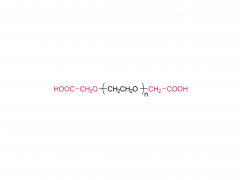
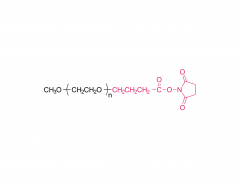
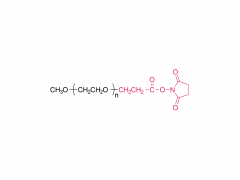
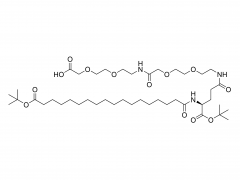
El éster amino-terc-butílico de bromo-PEG es un enlazador de PEG multifuncional y de doble función, compuesto por un extremo bromo, una cadena de polietilenglicol (PEG) de longitud ajustable y un grupo protector de éster amino-terc-butílico. Este compuesto tiene un gran valor en la química de bioconjugación y el desarrollo de fármacos, desempeñando un papel fundamental, en particular, en el campo emergente de la tecnología PROTAC.
II. Características estructurales
-
Extremo bromo: Actúa como electrófilo, reaccionando con nucleófilos como tioles y aminas para una conjugación eficiente.
-
Grupo protector éster amino terc-butílico: Puede desprotegerse en condiciones ácidas para liberar un grupo amino libre para su posterior funcionalización.
-
Longitud de cadena PEG ajustable:
-
Número de unidades PEG: Personalizable según los requisitos.
-
Efectos de la longitud de la cadena: solubilidad, impedimento estérico, propiedades farmacocinéticas.
-
-
Excelentes propiedades fisicoquímicas:
-
Buena solubilidad tanto en disolventes acuosos como orgánicos.
-
Mejora la biocompatibilidad de los productos conjugados.
-
Reduce las interacciones no específicas.
-
III. Principales áreas de aplicación
-
Desarrollo de PROTAC
-
Función de enlace: Sirve como puente de conexión entre el ligando E3 y el ligando de la proteína diana.
-
Propiedades de optimización:
-
Modula la permeabilidad celular de las moléculas PROTAC.
-
Afecta a la eficiencia de formación del complejo ternario.
-
Regula la actividad y la selectividad de la degradación.
-
-
Ventajas estructurales:
-
Extremo bromo para la unión del ligando E3.
-
Extremo amino desprotegido para la unión del ligando de la proteína objetivo.
-
La cadena de PEG proporciona la flexibilidad necesaria.
-
-
-
Química de bioconjugación
-
Funcionalización de proteínas/anticuerpos.
-
Modificación de compuestos peptídicos.
-
Colocación de etiquetas fluorescentes.
-
-
Ciencias de los materiales
-
Funcionalización de polímeros.
-
Modificación de la superficie.
-
Funcionalización de nanomateriales.
-
-
Sistemas de administración de fármacos
-
Diseño de profármacos.
-
Conjugación del fármaco con el transportador.
-
Mejorar la solubilidad y la estabilidad del fármaco.
-
IV. Descripción detallada de las aplicaciones PROTAC
-
Ventajas de diseño
-
Construcción modular: Los grupos bromo y amino proporcionan puntos de conjugación distintos, lo que facilita el ensamblaje modular de los PROTAC.
-
Longitud ajustable: La selección de 1 a 12 unidades de PEG permite ajustar con precisión la longitud del enlazador para optimizar la eficiencia de la degradación.
-
Estrategia de protección del grupo: La protección con éster terc-butílico garantiza que el grupo amino permanezca estable durante la síntesis y pueda desprotegerse selectivamente cuando sea necesario.
-
-
Implicaciones en el desempeño
-
PEG de cadena corta (1-4 unidades): Mayor rigidez, adecuado para objetivos que requieren un posicionamiento espacial preciso.
-
PEG de cadena media (5-9 unidades): Equilibra la flexibilidad y la limitación espacial, siendo adecuado para la mayoría de los diseños de PROTAC.
-
PEG de cadena larga (10-12 unidades): Máxima flexibilidad, adecuado para objetivos que requieren una exploración espacial extensa.
-